A Small Jewel.

A few plants of the many coloured forms of Xerochrysum bracteatum were grown this season for colour, and to attract butterflies and other insects for the camera. A check of them yesterday produced a tiny moth, approximately four millimetres long. Details of such a small moth couldn’t be seen until the photographs were up on the camera and computer monitors, and what a surprise they were. This moth is the Small Thistle Moth, Tebenna micalis, Choreutidae. The larvae feed on plants in the Asteraceae, or daisy family. Images two and three show that the moth is nectaring. Edit, just a week later another plant produced a second moth.

Click above images to enlarge.

Second moth.


December.

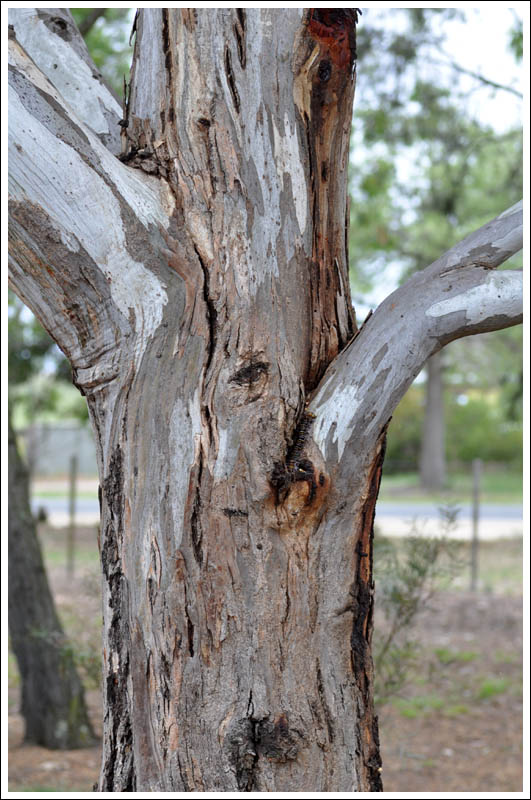
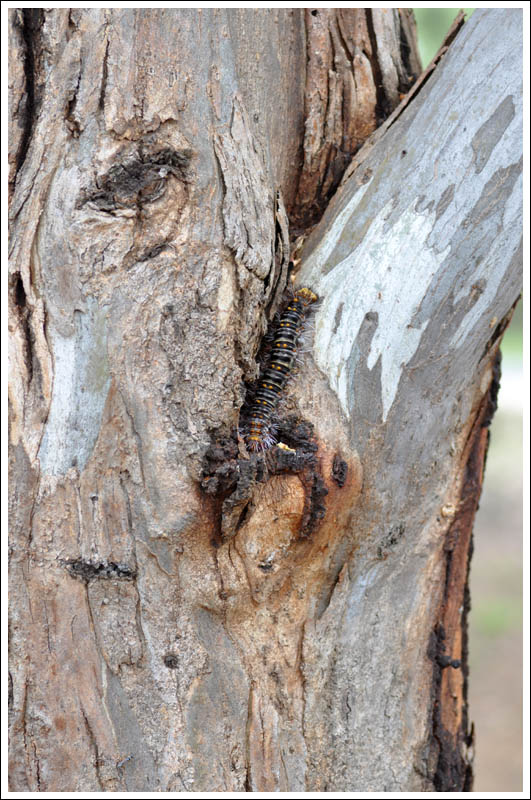
On the third of January this year, a big surprise was finding a Batwing Moth caterpillar on an Angophora costata in the garden, post here. Then in May, an adult of this autumn flying species came to the light, raising the intriguing possibility that a population was becoming established in the garden. Two days ago while looking for photographic subjects on the garden trees, one of the Forest Red Gums came up with the goods.

Yes, another Batwing Moth caterpillar in its daytime retreat from where it goes up into the canopy at night to feed. This individual is larger than the one photographed in January, being one hundred and thirty millimetres long from head to tail, an impressive creature.

This development seems to confirm that we now have a population of this spectacular big moth in our garden trees, that include several species of eucalypt plus two of the angophoras. It will be interesting to continue monitoring this species in our trees.

Click the last two images to enlarge.