Some Moths of the Oenochrominae.

Moths in this sub family of the Geometridae range from small like the Dichromodes, to quite large like the Monoctenia. This is the first post illustrating some of the larger species that have come to the light in the local area, descriptive data is from Moths of Victoria Volume 4. A common moth in the garden is the Hakea Wine Moth, Oenochroma vinaria, the larvae feed on plants in the Proteaceae which are abundant in the typical native garden.

From the garden plants or the street Silky Oaks, Grevillea robusta.

A different colour form.

This one was snapped in the box/ironbark bush.

The Ribbed Wine Moth, Oenochroma vetustaria is a denizen of the tall forest that comes to the light but is rarely seen. These two individuals were photographed in tall moist forest.

This moth, an Antictenia species from the box/irobark bush is possibly undescribed.

To be continued.
Click to enlarge.

October In The Box/Ironbark.

Good mothing nights have been a little hard to come by, so a calm night after a 34 degree day was ideal to have the light shining in the bush at Glenmaggie. With many Taxeotis starting to come in the night looked promising, and so it turned out to be with a large volume of moths and other winged insects covering the sheet and ground sheet during the session. This made photographs of single moths difficult, so some of the interlopers can be seen in the following images. The first moth of particular interest arrived soon after dark, it was a female Common Whistling Moth, Hecatesia fenestrata, (Agaristinae) a first record for the location. The larvae of this moth feed on Dodder Laurel, Cassytha species. Unusually among moths the antennae are clubbed. Males fly in the late afternoon and females will come to the light soon after dark as this one did.

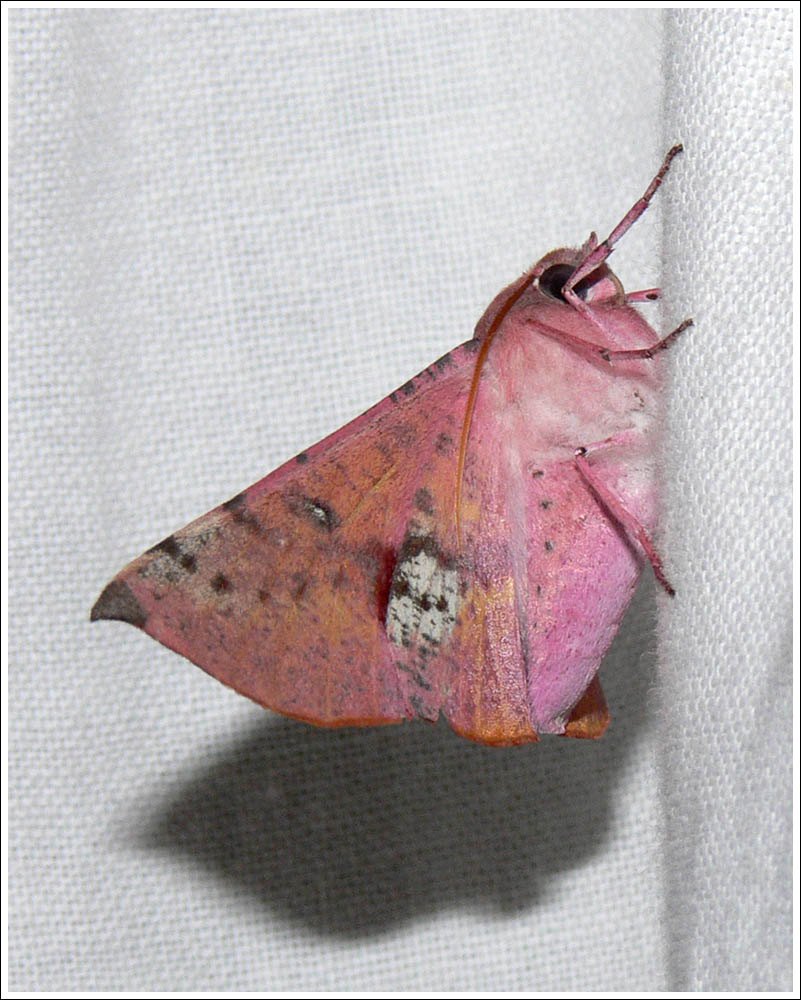
A large number of the Black Geometrid, Melanodes anthracitaria came in, and also a considerable number of the Pink Arhodia, Arhodia lasiocamparia, (Oenochrominae).

Epidesmia hypenaria, (Oenochrominae) settled showing its hind wings and antennae.

Genduara acedesta, (Lasiocampidae) is always nice to see, larvae feed on Cherry Ballart, a large tree is close to the mothing site.

Fluttering up the sheet among all the moths and other insects.

Also quite numerous were Picture-winged Leaf Moths, Aglaopus pyrrhata, (Thyrididae)

Cryphaea xylina, (Nacophorini) and friends….

The Bordered Browntail Moth, Urocoma limbalis, (Lymantriidae)

Two Footmen to conclude, Shepherd’s Footman, Termessa shepherdi, (Lithosiinae)

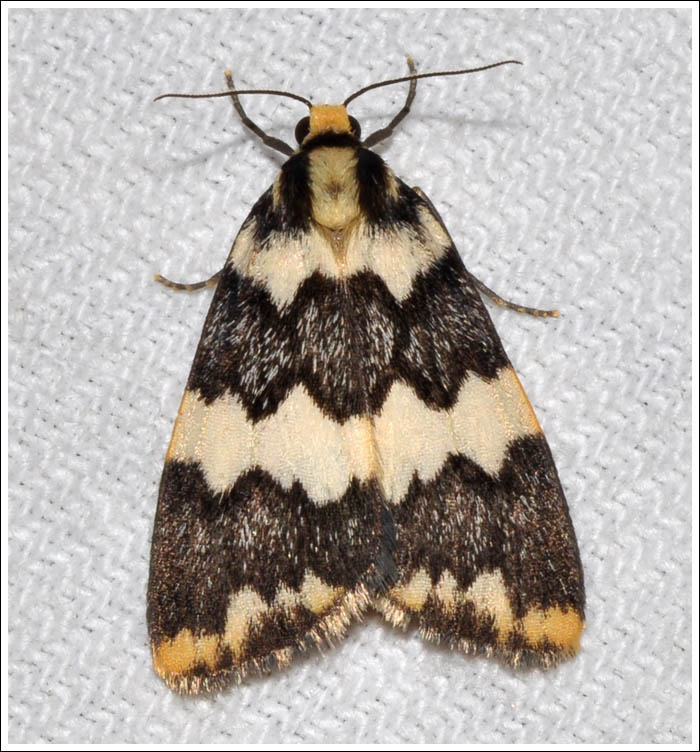
And the Tiger Footman, Thallarcha chrysochares posing here with companions.

References and further reading,
Moths of Victoria series,
Caterpillars, Moths, And Their Plants Of Southern Australia.