The Footmen #1

According to Britannica “the common name Footman is probably derived from the stiff, elongate appearance of the adult moths, which usually align their narrow wings with the body as if standing at attention”. The different genera so called are found in the Lithosiinae sub family of the Arctiidae, and although there has apparently been some reclassification, this is how they are found in the Moths of Victoria Vol. 2 second edition. Moths from the footman group that have come to my light are from eleven genera and to date number thirty species. The majority are fairly plain in appearance, but this post will feature six of the more distinctive species.

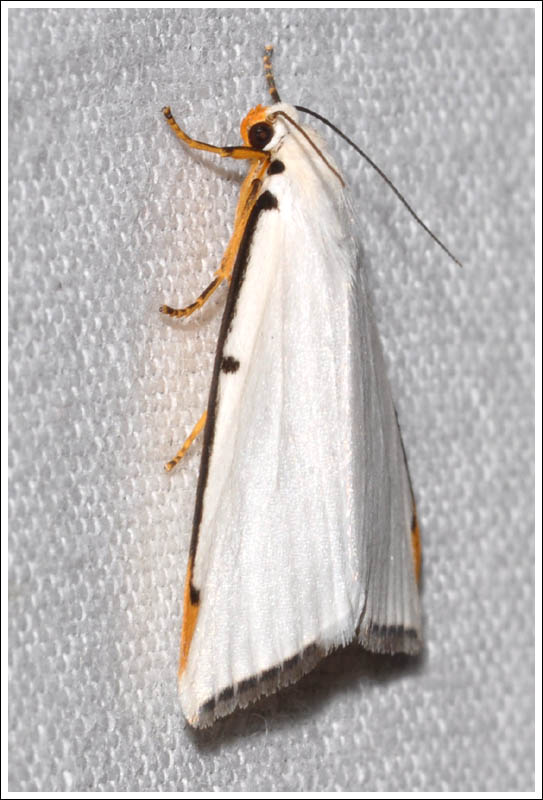
The Snowy Footman, Termessa nivosa.

The Red Footman, Scoliacma bicolora.

The Diminutive Footman, Scoliacma nana.
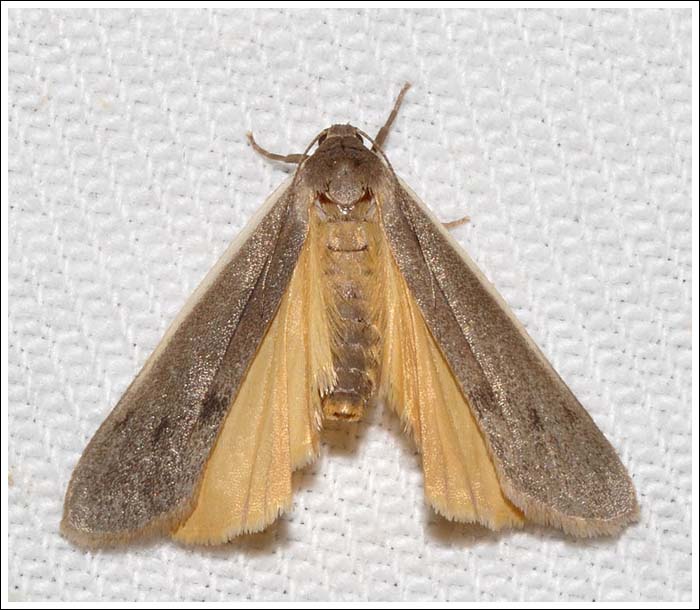
Doubleday’s Footman, Castulo doubledayi.

The Two-ribbed Footman, Palaeosia bicosta.

Palaeosia MOV sp(1).

The Five-banded Footman, Hectobrocha pentacyma.

Click images to enlarge.

References and further reading,
Moths of Victoria Vol. 2  Second Edition.

The Plume Moths….

….fragile, and insubstantial, sometimes not much larger than a big mosquito, they can be easily overlooked on the moth sheet, and difficult for the camera to keep in focus, particularly if the sheet is moving in the breeze. The most common species in this part of Gippsland is Platyptilia emissalis, the larvae of which feed on the Speedwells, a group of plants variously known as Veronica, Parahebe, and Derwentia, but now apparently settled in Veronica. The garden has plants of Digger’s Speedwell, V. perfoliata, and Derwent Speedwell, V. derwentiana, the former Bill Cane’s white form, the latter his blue form, and the moth is consequently common.

On more than one occasion a gravid female has been seen on the Derwent Speedwell.

Two more photos, the second showing the moth resting with rear legs together, as seen sometimes. All photos are greatly enlarged.

The next moth, Wheeleria spilodactylus was  deliberately  introduced in an effort to control Black and White Horehound. On hatching, the larvae bore into the young shoots and work their way down to the mature foliage.

Platyptilia celidotus is a species characterised by two dark marks on the forewings.

Stenoptilia zophodactylus is tiny with a wingspan of about one centimetre. It is found all over the world and the larvae feed on plants in the Gentianaceae family. The Common Centaury, Centaurium erythraea is widely found in the bush where these were photographed. A characteristic of this moth is the extreme length of its hind legs.

Finally, Stangeia xerodes, nicely showing the wing plumes that give the group their common name. The larvae feed on a variety of plants including the tender foliage of wattles.

References,

M Hewish,

Moths in Australia.

Click to enlarge.