April in the Box/Ironbark

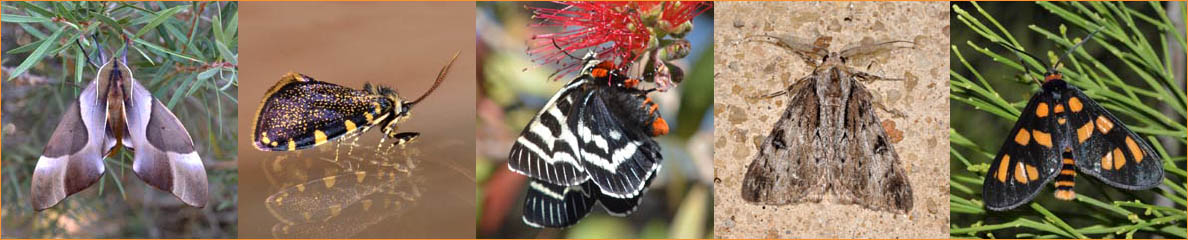
Following on from the previous post, the bush is extremely dry with the continuing drought, and the number and range of moths to the light was well below par. Just one sizeable moth came in briefly, a Monoctenia, but it quickly flew off into the night and didn’t return. The Painted Cup Moth, Doratifera oxleyi (Limacodidae) is flying at the moment with females coming to the light.

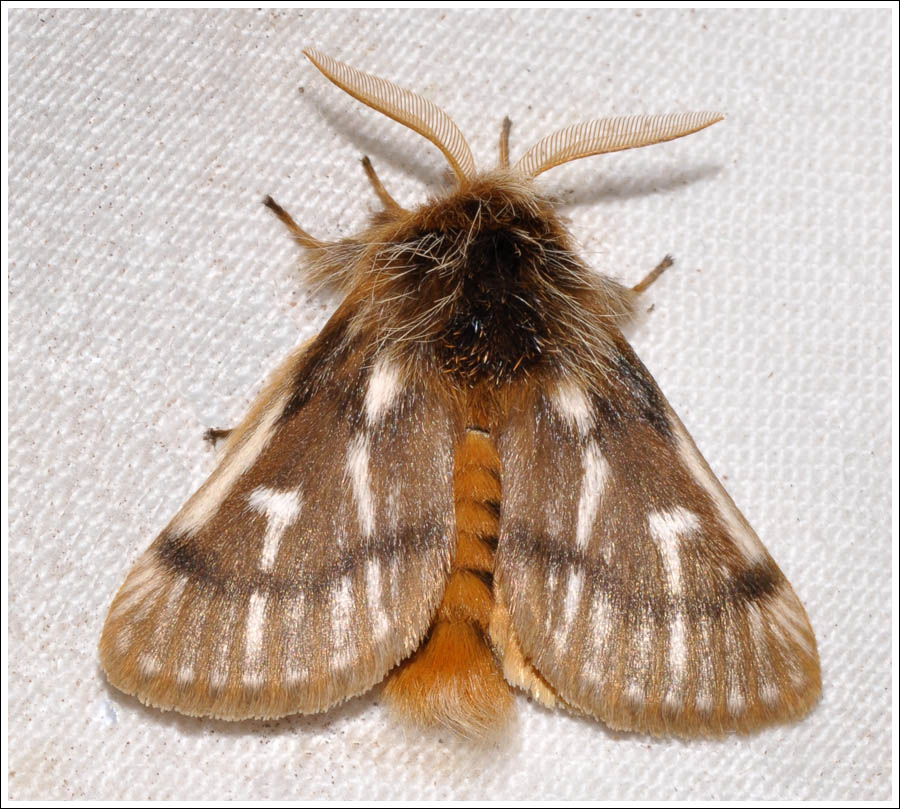
The male is quite different, here is one from a previous occasion.

The Orange Cup Moth, Pseudanapaea transvestita also came in.

Pyralids were among the most numerous at the light. Salma species can be most attractive with their neat and tidy appearance featuring subtle colours and patterns.

Salma cholica.

Salma marmorea.
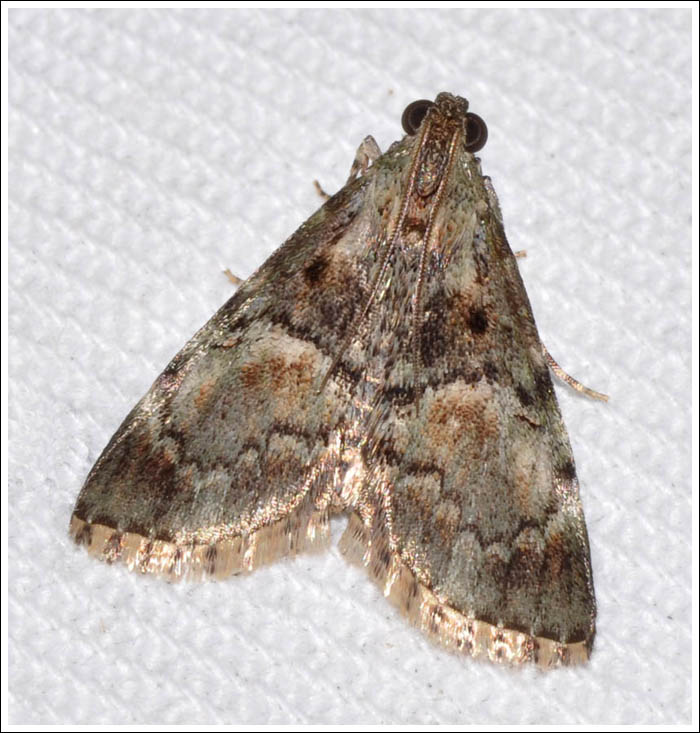
Larvae of the Jagged Bark-moth, Lipogya exprimataria, (Boarmiinae) feed on foliage of Exocarpos cupressiformis. A large tree stands near the mothing spot, and the adults have been regular at the light during flight months, April being the peak time.
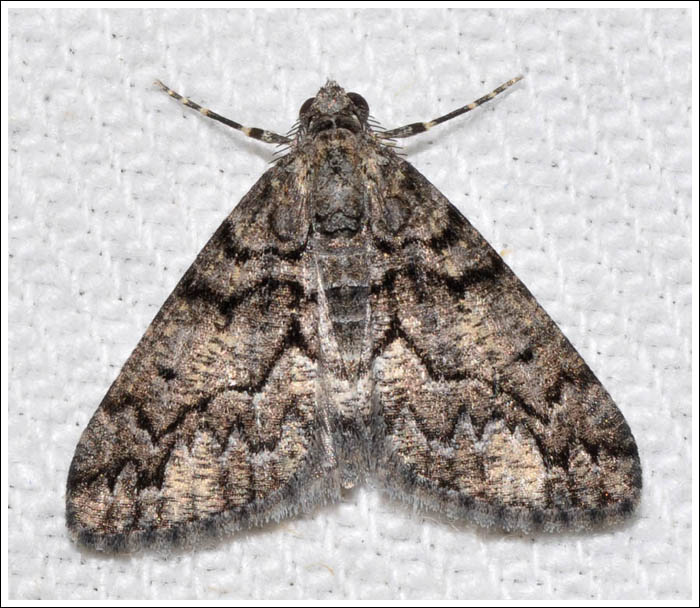
About the only other Geometrid to come in was the Grey-caped Line Moth, a female
Stibaroma melanotoxa (Nacophorini)

Small moths were the most numerous and included these two Tortricids,

Meritastis pyrosemana
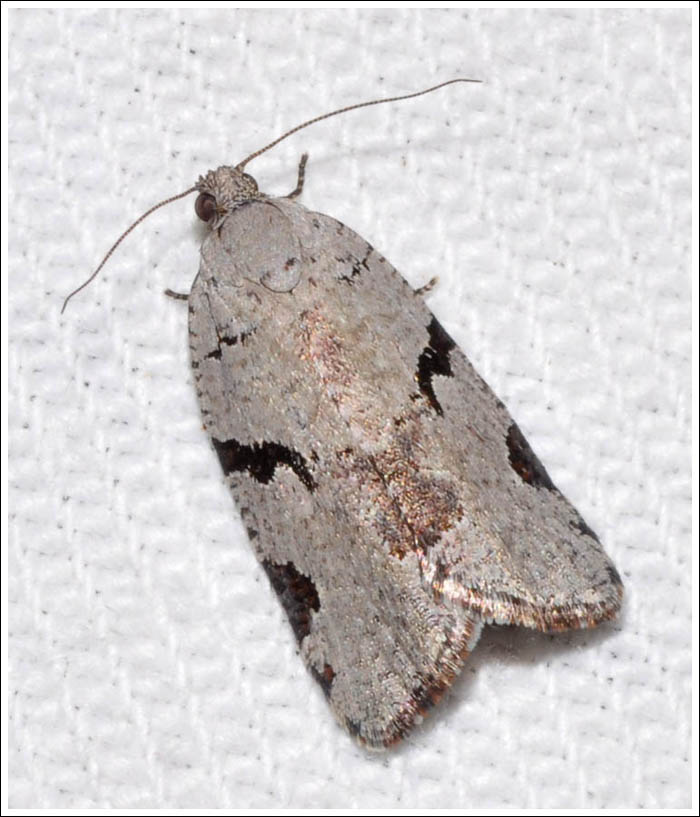
Meritastis lythrodana.

Nola monozona (Nolinae) is known as the Epaulette Tuft-moth for obvious reasons.
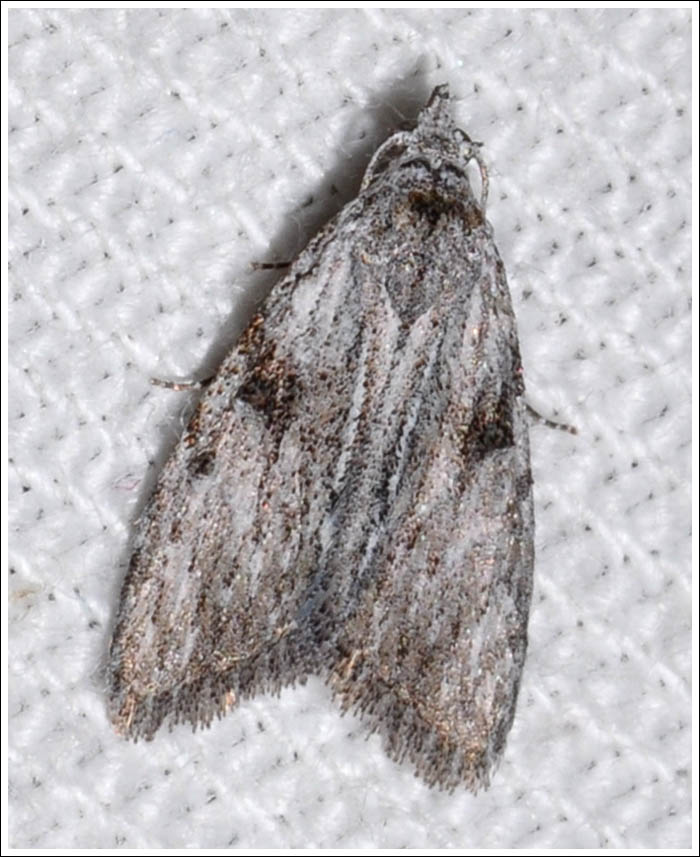
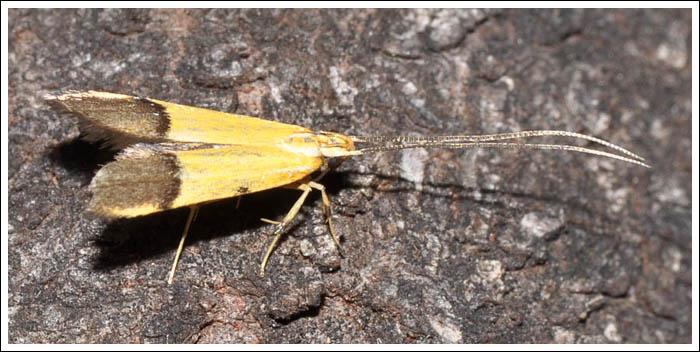
And to conclude, a rather worn little longhorned moth, Crocanthes micradelpha, (Lecithoceridae) The larvae, In common with many of the small moths feed on dead leaves on the forest floor, helping to recycle them and reduce fire risk. This mothing location has not been burnt for over sixty years, is very open, and the recycling of the leaf litter occurring due to abundant invertebrate life is an object lesson in the efficiency of the natural processes.
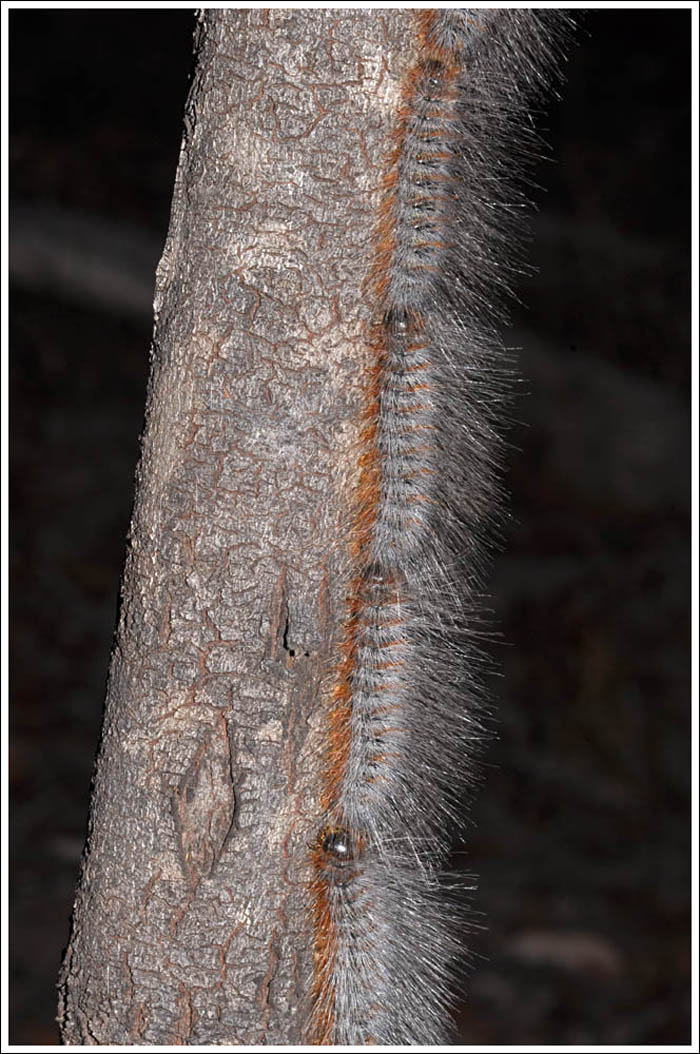
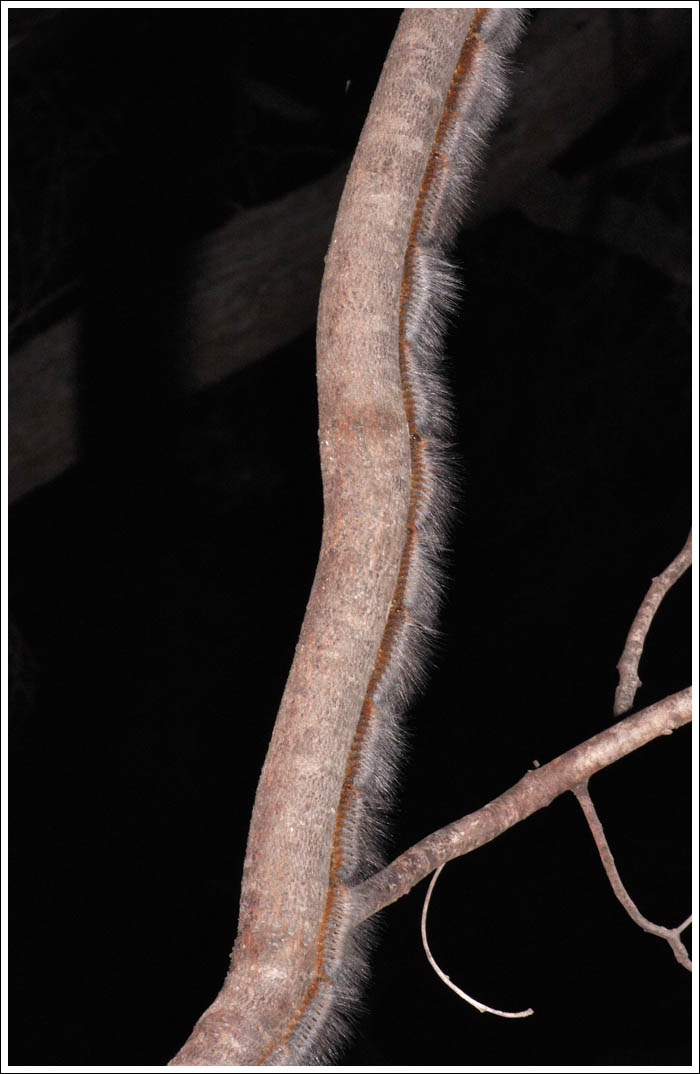
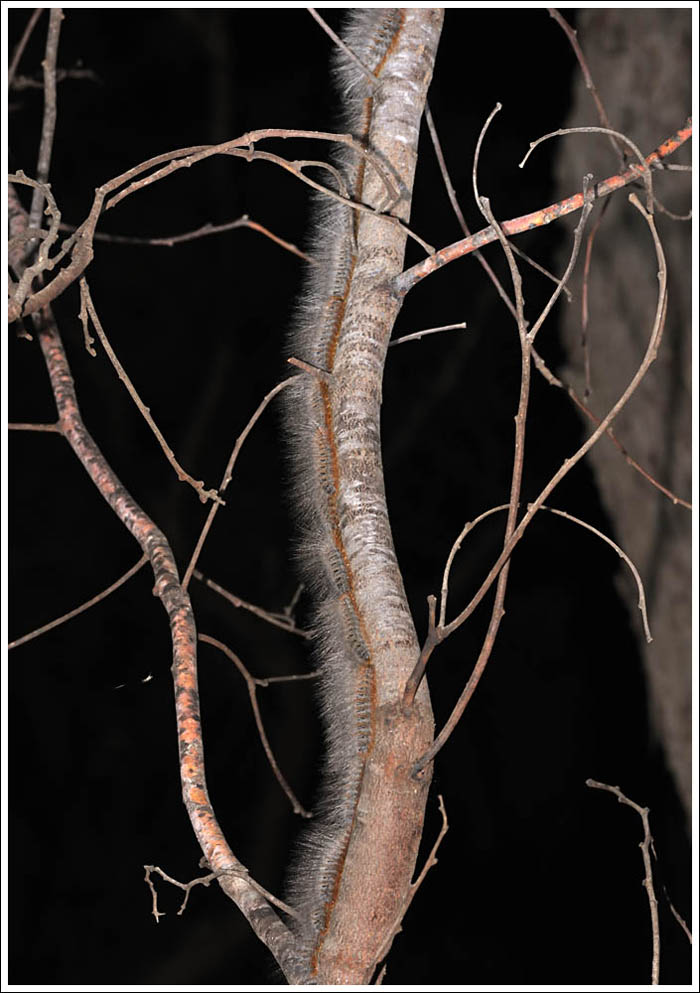
The Processionary Caterpillar

In other words the larvae of the moth Ochrogaster lunifer, (Notodontidae) about which Moths of Victoria Volume 2 notes “Ochrogaster is believed to contain several species throughout Australia” and “For the moment Victorian species are included here under the name lunifer”
The streaked form is the one that has been encountered in the local area.

All images except verticals will enlarge with a click.

On his moth site, Don Herbison-Evans suggests that the types of shelters constructed may be pointers to different species, but more on that a little later. On a recent night in the box/ironbark bush, a look around with a torch while waiting for moths to arrive at the sheet paid off with the discovery of a procession of the larvae making their way up a tall Golden Wattle to feed on the foliage. All photographs were taken with the 100 mm Tokina macro lens, and of course flash.

The caterpillars generally make bag shelters from silk, frass, and other debris, located either on the ground at the base of the tree, or up on the trunk or a branch. A return trip to the site was made the next day to further investigate, and there they were on the ground next to the trunk, in a tight group with no sign of any bag shelter.

Is the lack of a shelter a characteristic of this particular local population? Who knows, perhaps the answer will be forthcoming sometime in the future after further study of the genus. And to repeat a previously published warning, neither the caterpillars or the moths should be touched, the barbed filaments they carry can penetrate the skin and cause urticaria and a number of serious conditions. Children are particularly at risk.

References and further reading,
Moths of Victoria Volume 2
Australian Moths.