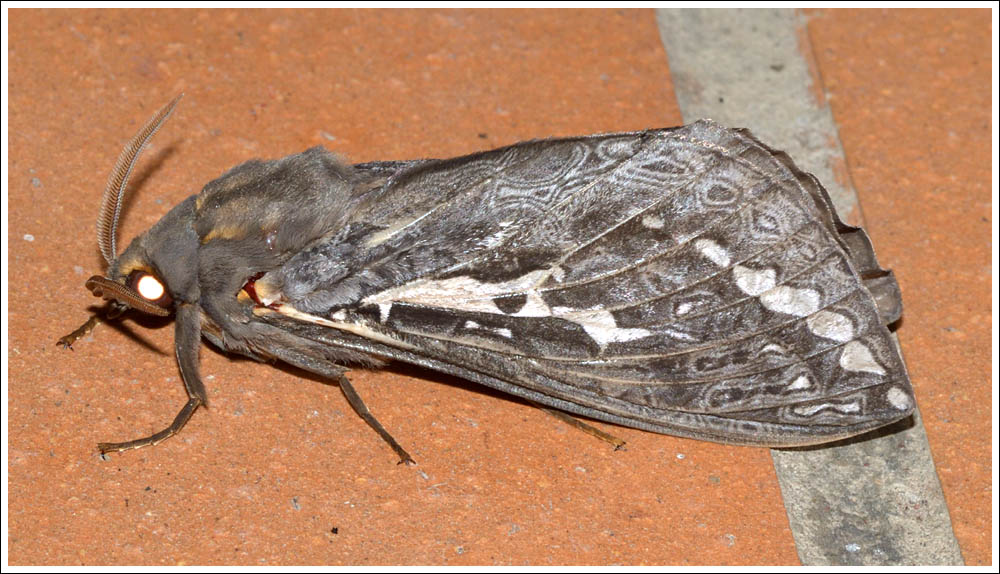
Abantiades atripalpis, formerly known as Trictena atripalpis is a large Hepialid that commonly comes to light when autumn rains are falling, hence the name Rain Moth. The female lays an astonishing number of eggs, over forty thousand have been recorded, they are scattered on the ground as she flies and the rain may help to wash them into cover. The larvae live under ground feeding on tree roots, and after the adults emerge the pupal cases may be found protruding from the ground. Recently, on a night when soft rain was falling, this male came to the verandah light, and after fluttering around for a short time settled on the tiles for the photograph.
Click to enlarge.