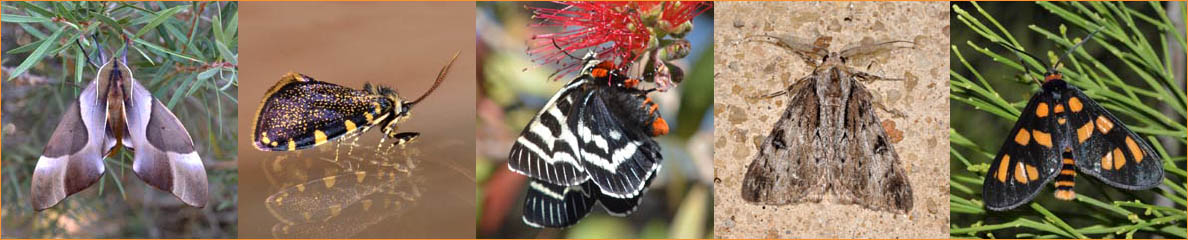
With daylight saving over it was time to fire up the moth light at home to check on autumn flying moth species and numbers. It has to be said that the two night sessions were very disappointing with the only moths to arrive in numbers being small grass moths. A few Noctuid species were the next most abundant, with other genera very scarce. The most common Noctuid was Proteuxoa MOV species 6.


Proteuxoa capularis and a Heliothinae species were worth photos.


A fourth Noctuid, Chrysodeixis eriosoma.

On both nights among the first in to the sheet was the small Hepialid, Fraus simulans. A technical note, they were photographed side on at an acute angle to the sheet, which has the effect of rendering the white sheet grey.


One of only four Geometrid species to come in during the two sessions was Stibaroma MOV sp(1).

A small Psychid.

And when packing up, a Mistletoe Moth larva was discovered on the tiles.

Click to enlarge.