A Small Jewel.

A few plants of the many coloured forms of Xerochrysum bracteatum were grown this season for colour, and to attract butterflies and other insects for the camera. A check of them yesterday produced a tiny moth, approximately four millimetres long. Details of such a small moth couldn’t be seen until the photographs were up on the camera and computer monitors, and what a surprise they were. This moth is the Small Thistle Moth, Tebenna micalis, Choreutidae. The larvae feed on plants in the Asteraceae, or daisy family. Images two and three show that the moth is nectaring. Edit, just a week later another plant produced a second moth.

Click above images to enlarge.

Second moth.


November.

A selection of moths to the light from the garden, beginning with a fresh female Entometa fervens, the Common Gum Snout Moth. (Lasiocampidae)

Some Geometrids, a female Teatree Emerald, Aeolochroma metarhodata, (Geometrinae)

Cleora sp (2) (MOV) female, (Boarmiini)

Aporoctena sp (1) (MOV) male, (Nacophorini)

The next moth, Maroga melanostigma, (Xylorictidae) one of the timber moths, fluttered around frantically and was only able to be thus photographed. This species is fairly common, and probably came from an Acacia floribunda that is being systematically eaten to death by the boring larvae.

Click above images to enlarge.

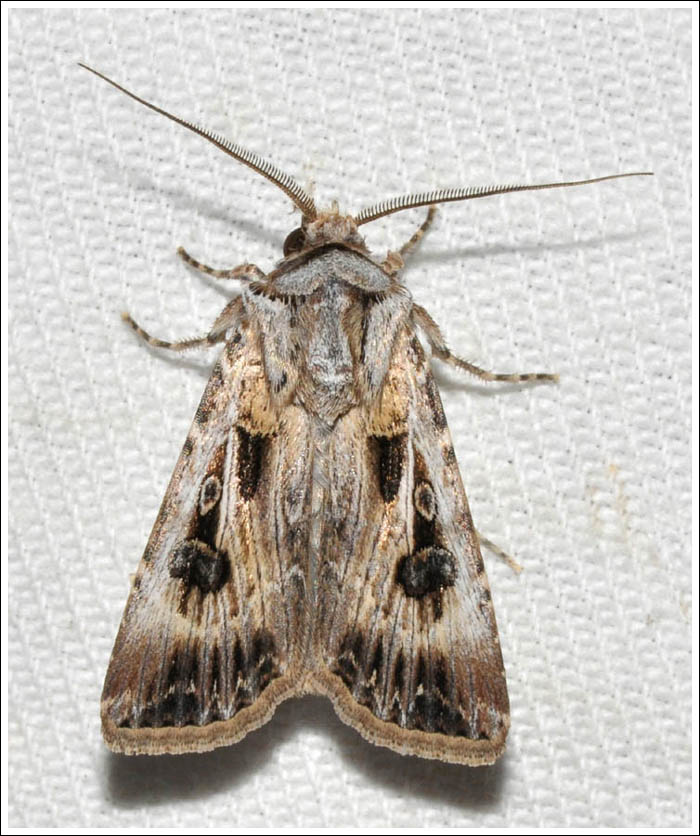
On this night large numbers of the Australian Native Budworm, Helicoverpa punctigera, (Heliothinae) descended on to the light and sheet, generally making a nuisance of themselves. Several other species of Noctuidae also came in including these two, male Agrotis munda and male Agrotis porphyricollis, (Noctuinae) Both these moths are interesting in that they have pectinate antennae, whereas Noctuids more generally have simple antennae.

Three smaller moths to conclude, Thallarcha sparsana, (Lithosiinae) the Fair Footman.

An Oecophorinae species,

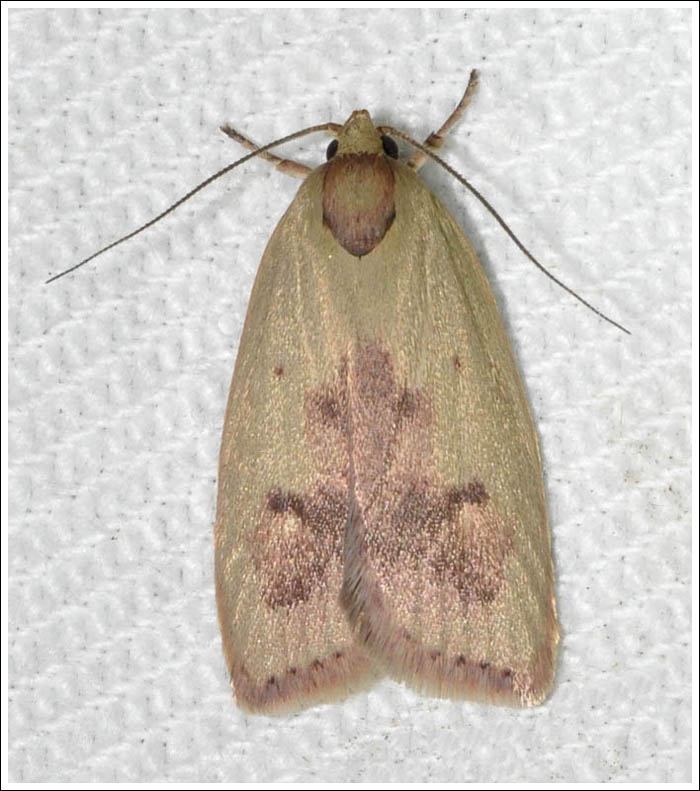
And a Pyralid, Mimaglossa nauplialis.