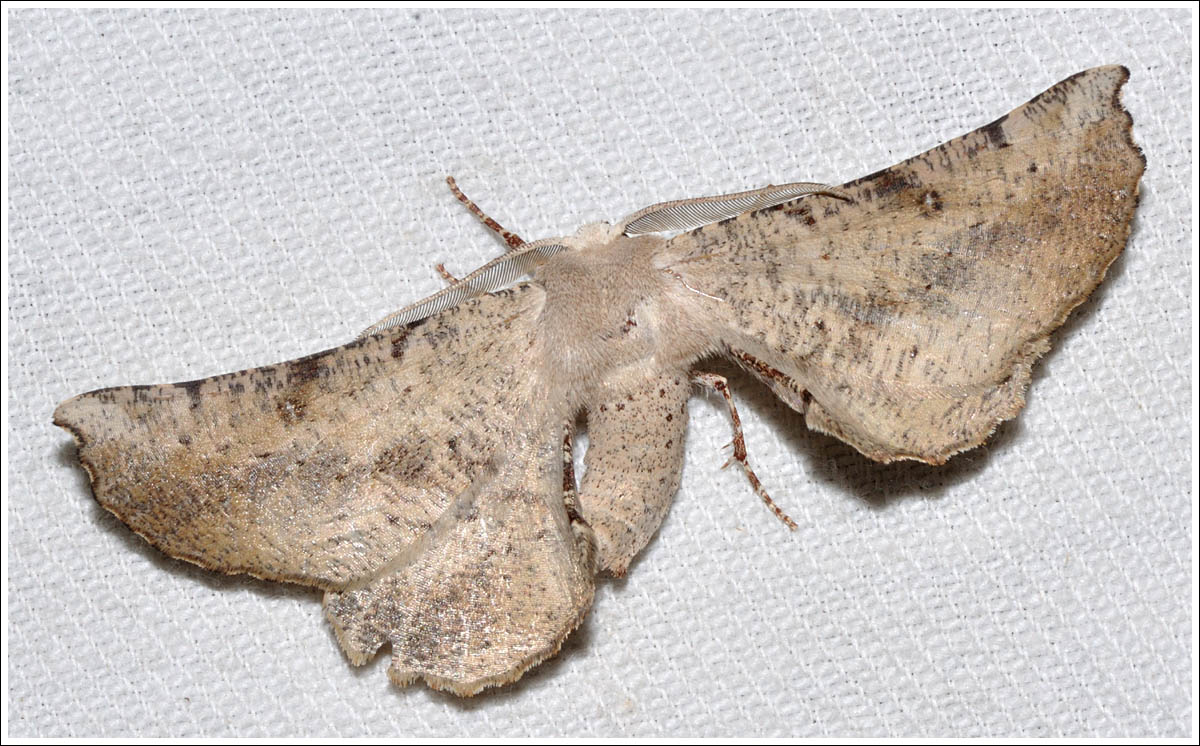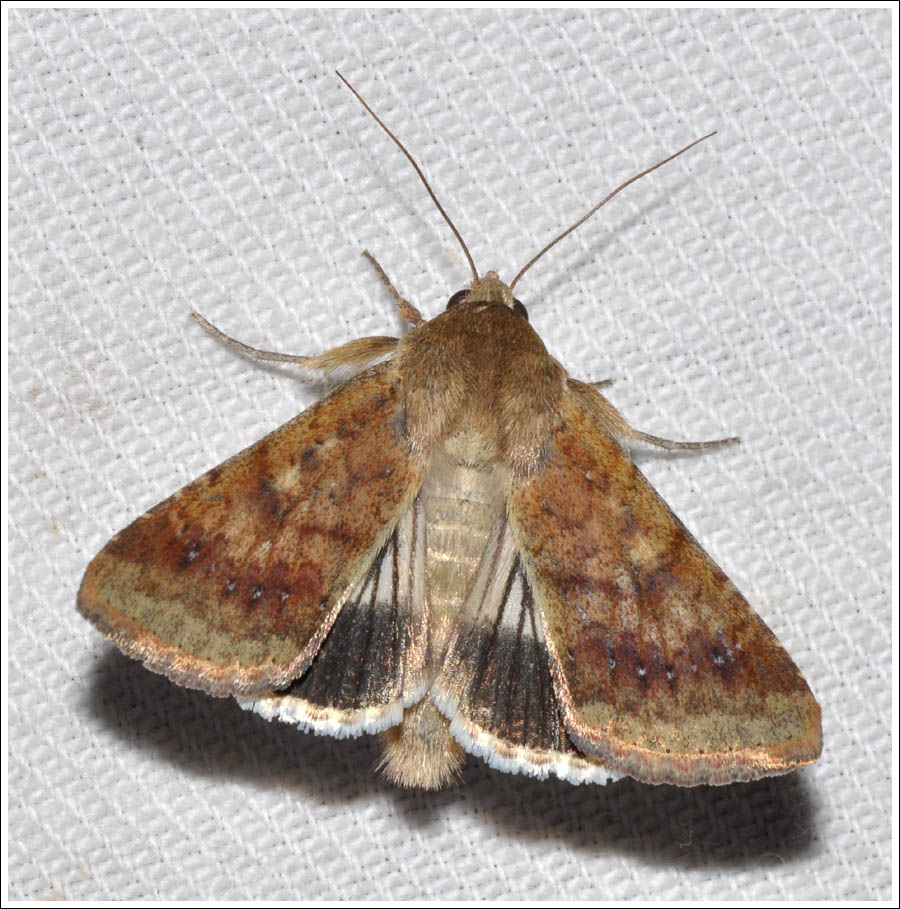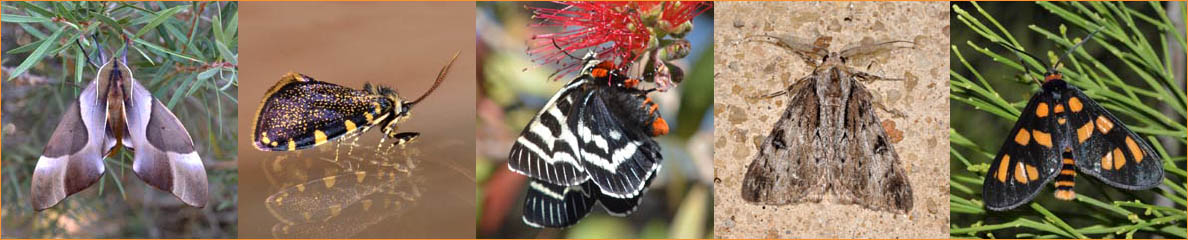
Found around the house and garden during the daytime, and to the moth light at night.
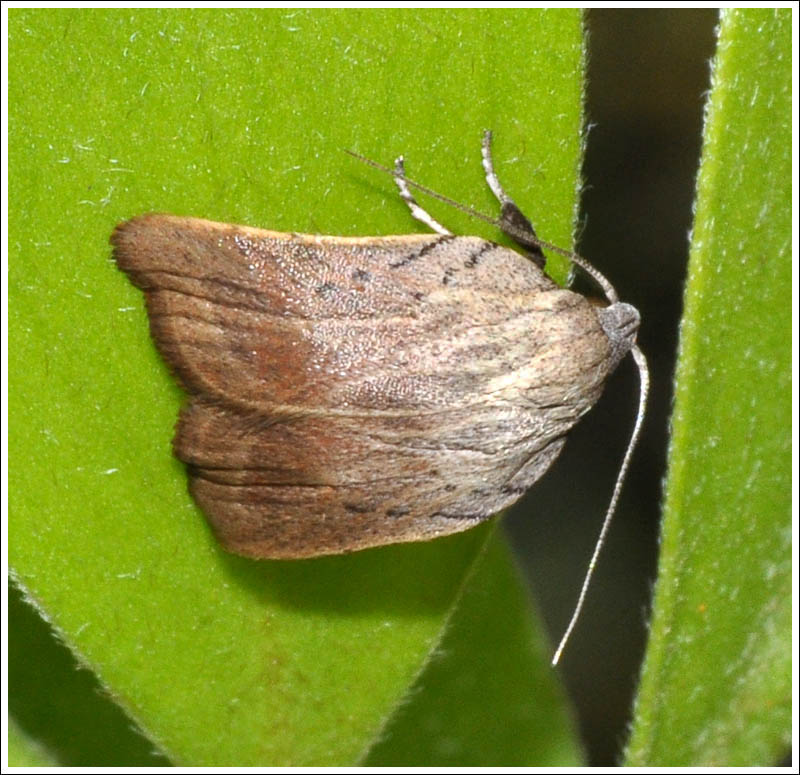
Neumichtis nigerrima, (Amphipyrinae) is one of the many Noctuids that are agricultural or garden pests. This one was found and photographed on the verandah tiles

The front verandah is also a location where resting Ectropis moths are quite often found. This individual is quite worn with many of the distinguishing features faded but the dip in the hind wing line suggests that it is Ectropis bispinaria, (Boarmiinae)

Spectrotota fimbrialis, (Pyralidae) is abundant, this was a nice specimen on a tree trunk.

Also found on a tree trunk, this nicely marked small moth for the time remains anonymous.
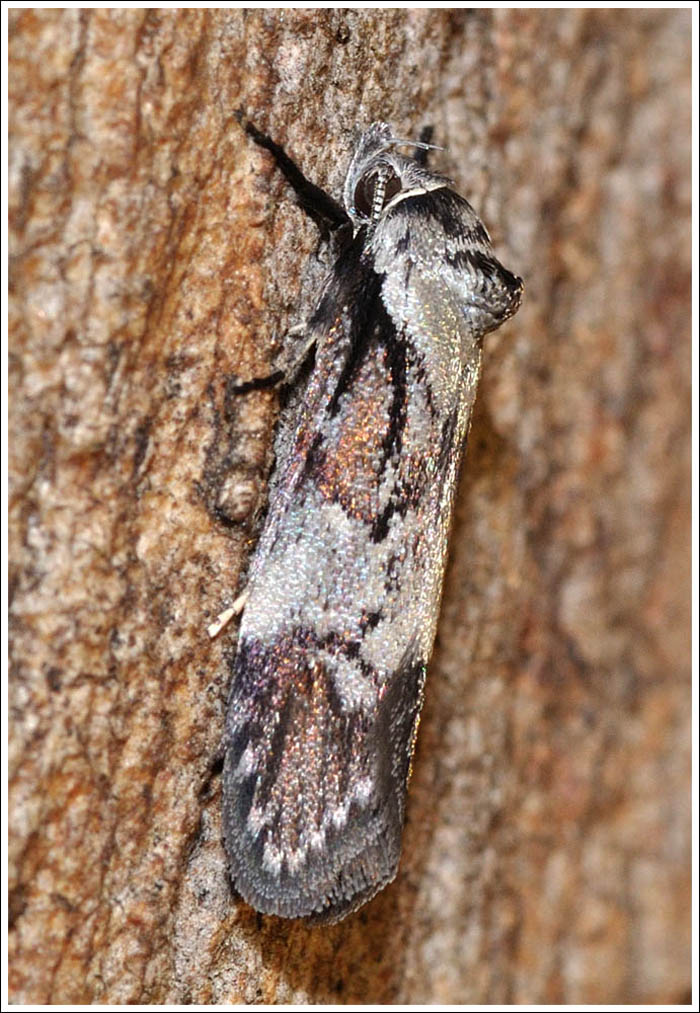
Disturbed while gardening this moth was very elusive and only one photo was taken when it landed on a persoonia. It is Tortricopsis pyroptis, (Oecophoridae)
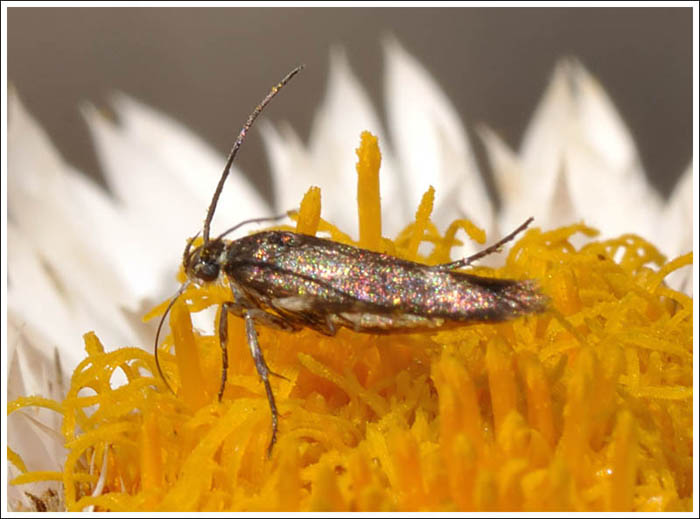
Also anonymous for now this tiny but colourful Oecophorid found nectaring on a Xerochrysum.
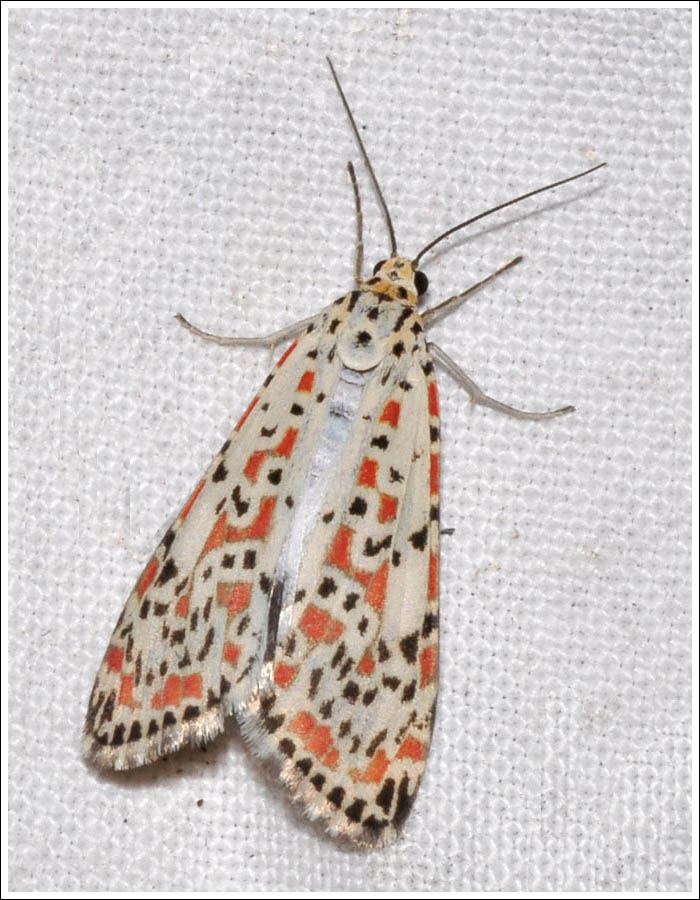
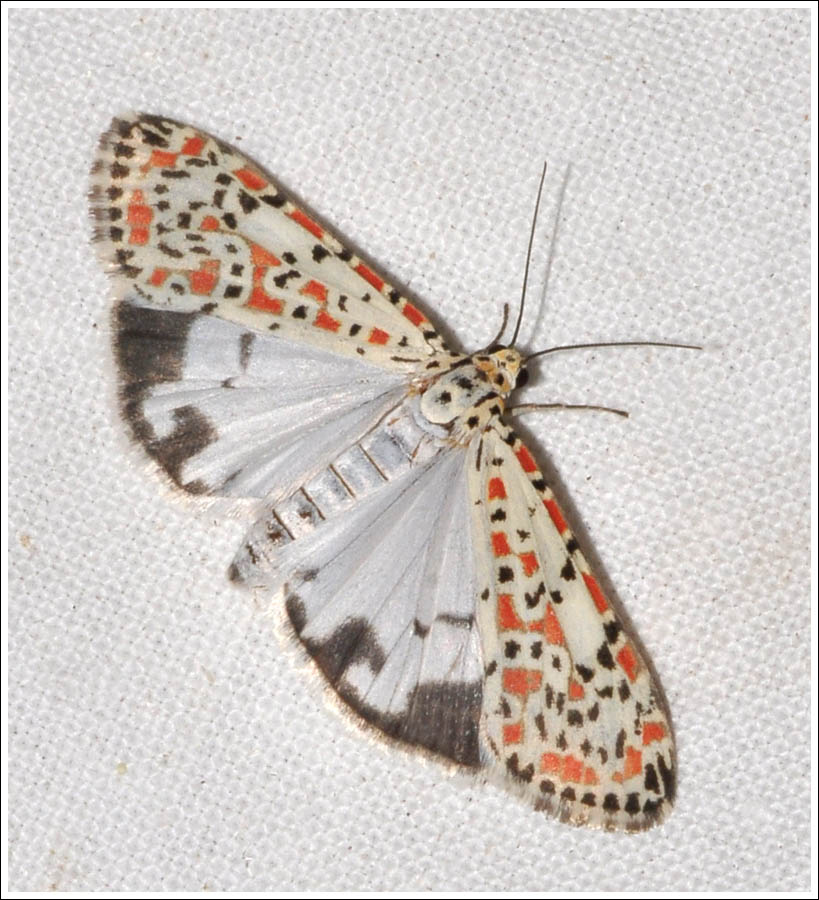
The Heliotrope Moth, Utetheisa pulchelloides, (Arctiinae) can migrate south in big numbers. Just two came to the light, the second shot while fluttering shows the hind wings.
February and March are the main flight months for Elhamma australasiae, (Hepialidae) They can come to the light in large numbers, plain females and smaller patterned males.
Female.

Male.