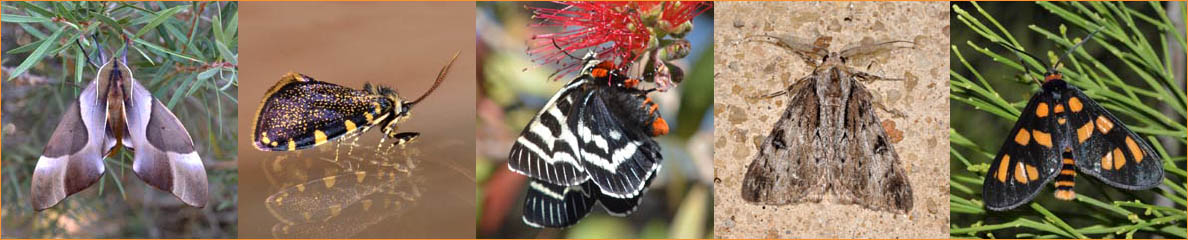
The typical forest of the higher ground around Lake Glenmaggie is box/ironbark, ie. Eucalyptus polyanthemos and tricarpa, with E. macroryncha. There is a property by the lake with this forest type that has not been burnt for over fifty years, and consequently is very open. The understory includes the occasional Exocarpos cupressiformis, restricted patches of the ubiquitous Kunzea ericoides, with Acacia pycnantha, and lower to the ground, Stypandra glauca, Platysace lanceolata, and Hibbertia obtusifolia to name a few. The terrestrial orchid population is quite rich with Caleana major, Paracaleana minor, Calochilus paludosus, Diuris sulphurea, Thelymitra ixioides, and Caladenias catenata, carnea and fuscata to name some of the more eye catching species. When this country is burnt it quickly becomes almost impenetrable, due to profuse regeneration of the Golden Wattle and Burgan, and much of the orchid flora is choked out.
Close to the lake this vegetation grades into the red gum country of the submerged Macalister River valley. The ground flora found there includes heathland plants like Grass Trigger Plant, Bulbine and Chocolate Lilies, with Pterostylis species, and occurrences of Grevillea lanigera, and Cryptandra amara, both latter species unfortunately declining.
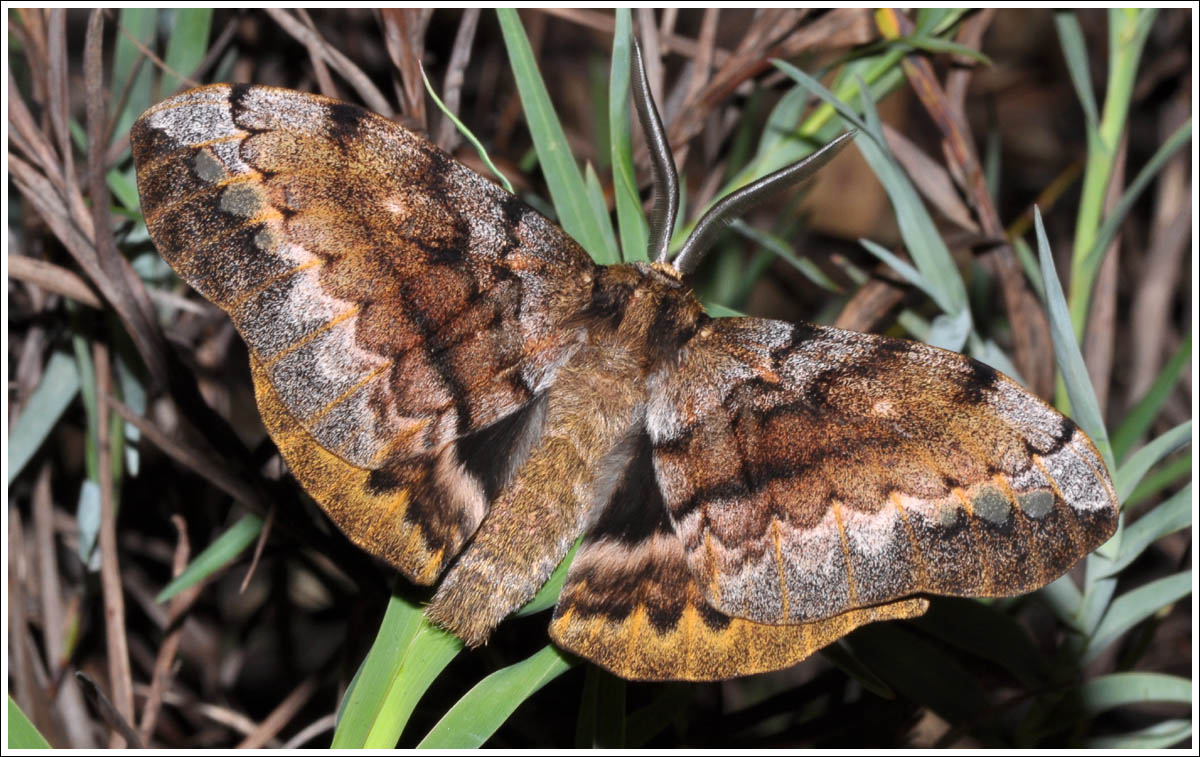
The moth fauna in the block has proved to be abundant and diverse, thanks largely to the fact that it has escaped bushfire for so long, and some worthwhile records have been made during several surveys. The last occasion was in early May when the magnificent autumn flying Batwing Moth, Chelepteryx collesi (Anthelidae) is on the wing, and they didn’t disappoint with a number of males coming in to the light during the session.
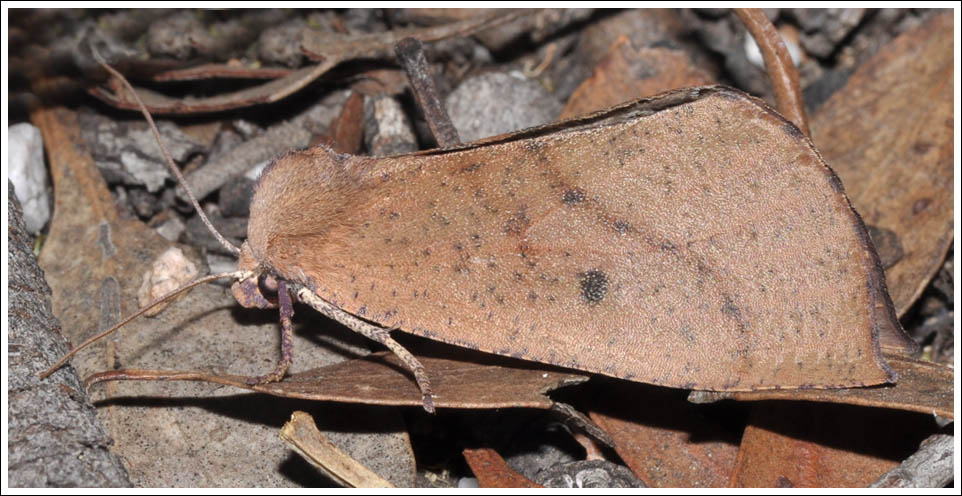
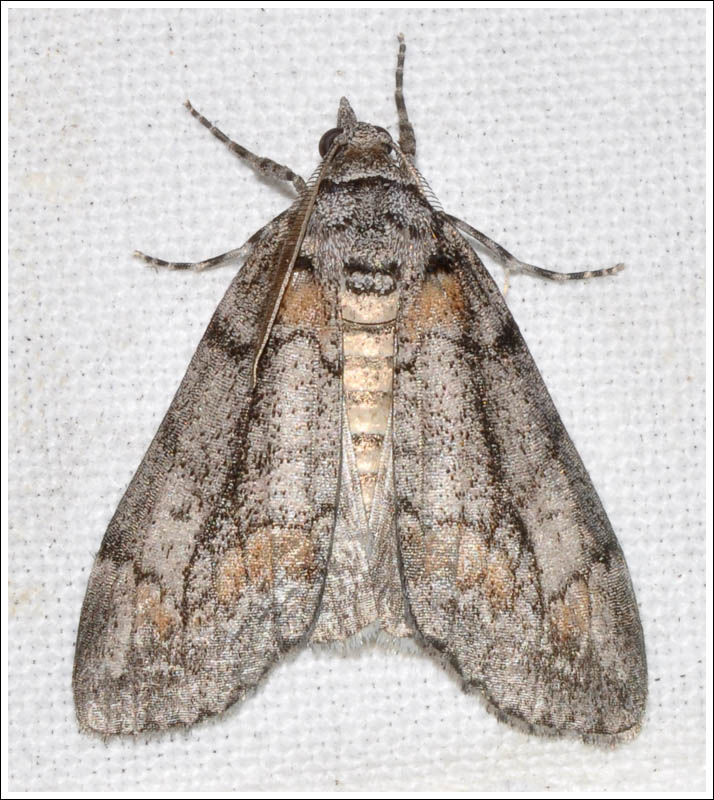
Also to the light in numbers was another autumn flying species, Fisera hypoleuca, (Nacophorini), females except for one male, identified by its pectinate antennae.
Female.
Male.
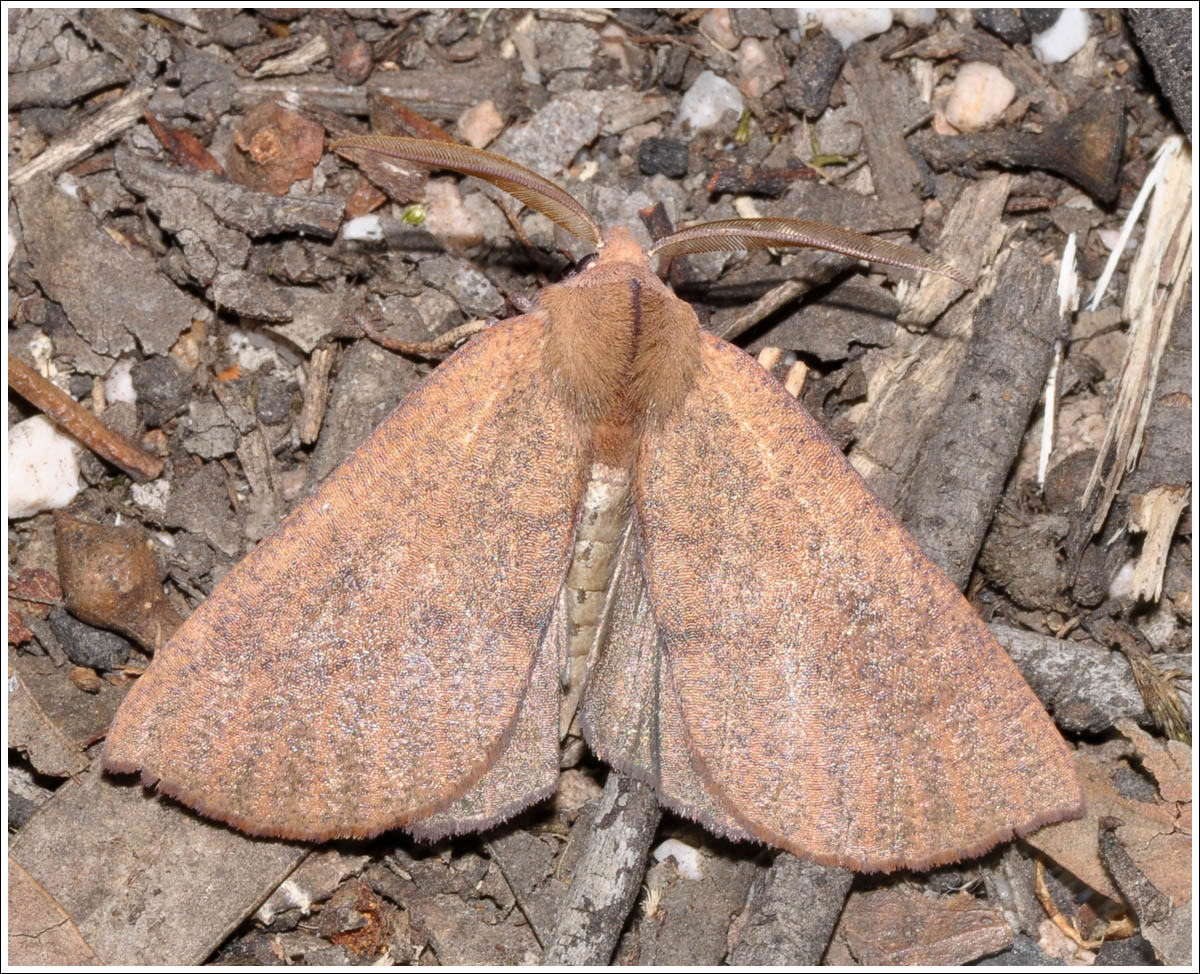
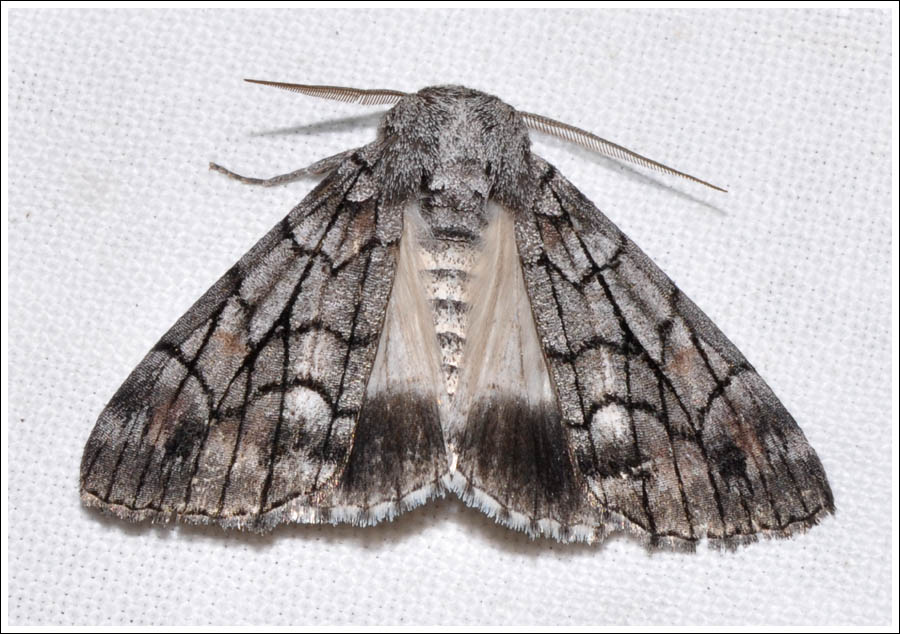
Continuing with autumn flying moths in the Nacophorini, male and female Smyriodes trigramma, the female is quite different to the male.
Male
Female
Plesanemma fucata is a lovely moth.

The next moth is another to which a name cannot be confidently applied, it is a Stibaroma species, and in MOV 5 it is designated (sp 1). Again a male moth, the larvae feed on eucalypt foliage as do the larvae of all the above moths.
And lastly in this group, Thalaina selenaea, the plain-winged form. Another form with a diagonal line on the wings is of more westerly distribution. The pose in this photograph is not the norm, but is featured for its humorous aspect. The larvae of this moth feed on wattle foliage.
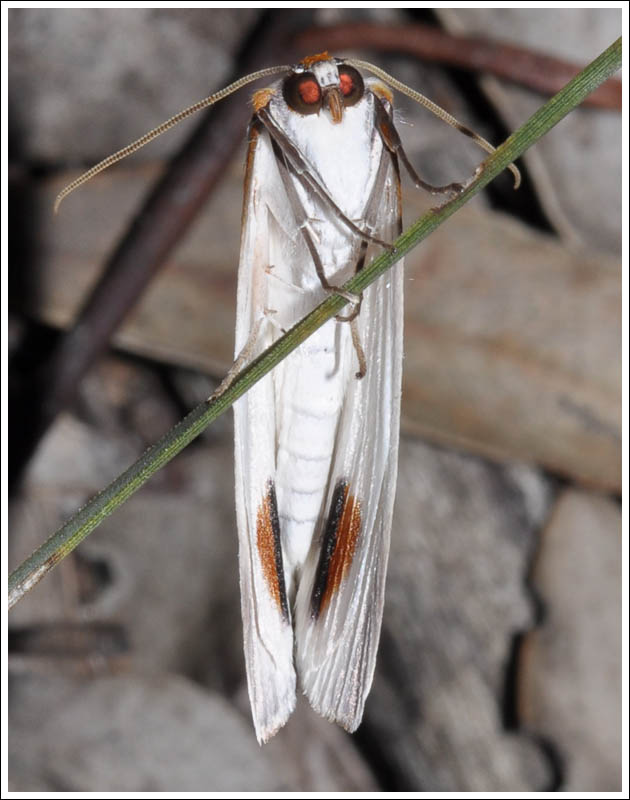
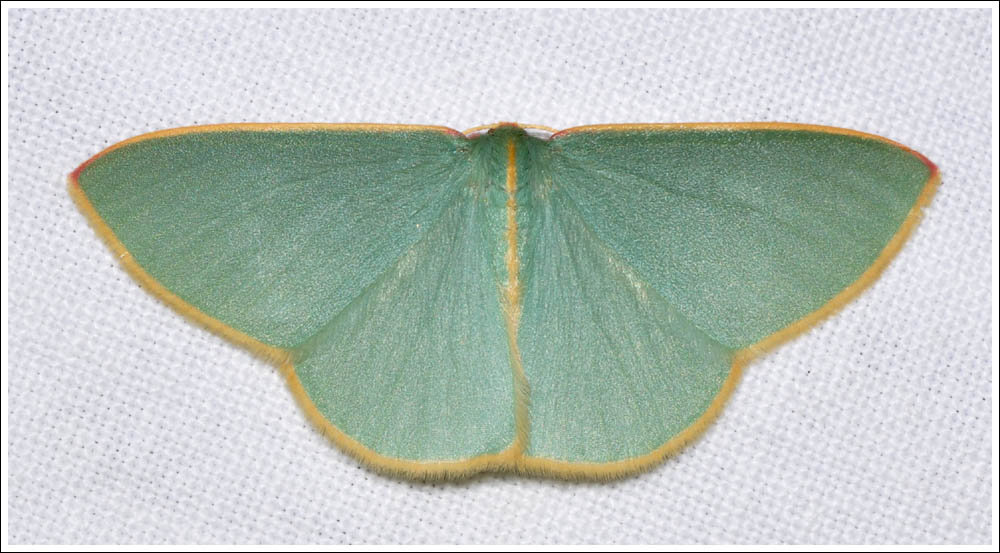
The next moth is another Geometrid, an Emerald, Chlorocoma assimilis, (Geometrinae) it can be identified by its plain wings, the red tinge on the shoulder and tip of the leading edge of the fore wing, and the yellow dorsal stripe.
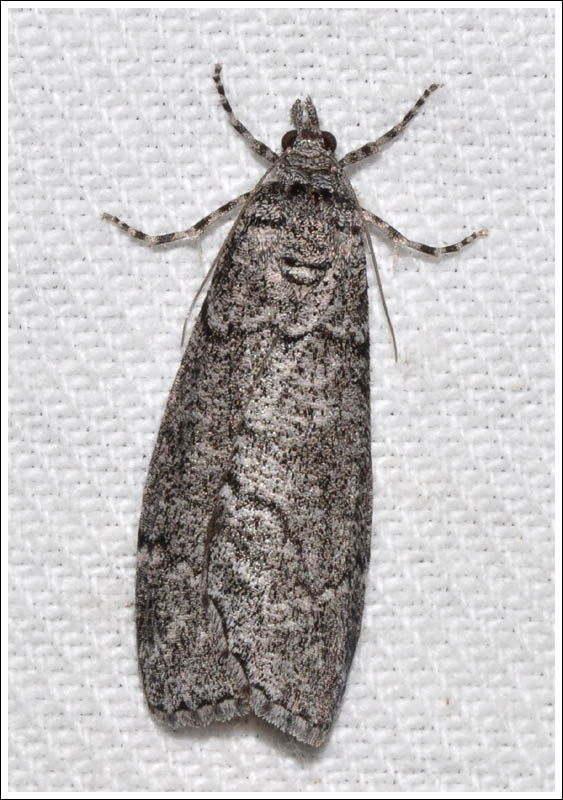
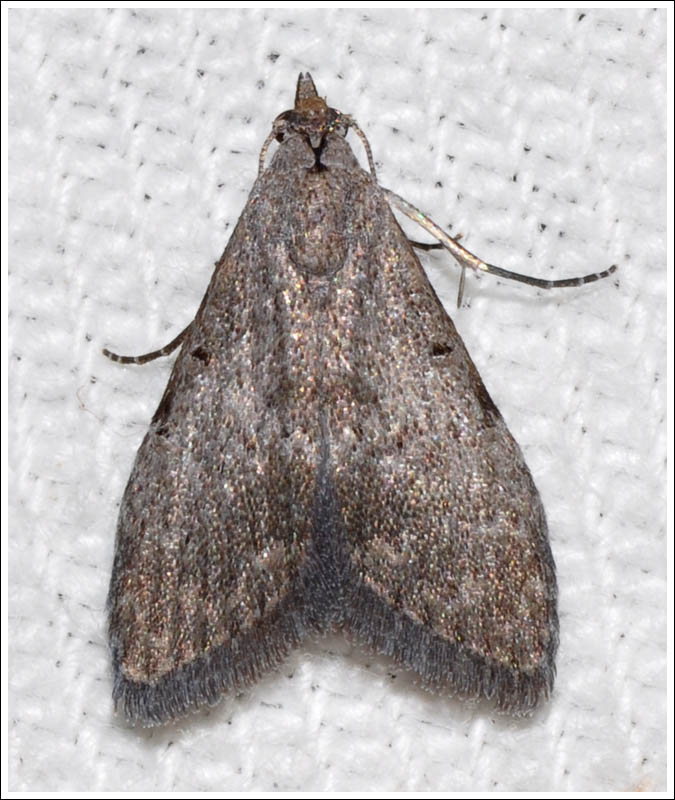
The last moth in this autumn collection from the box/ironbark is a small Nolid that has the characteristics of Nola pleurosema, (Nolinae) but with colour differences.
All moths photographed during this session can be seen here.
References.
P Marriott
M Hewish
Moths of Victoria Volumes 2, 4, and 5.
Click images to enlarge.


