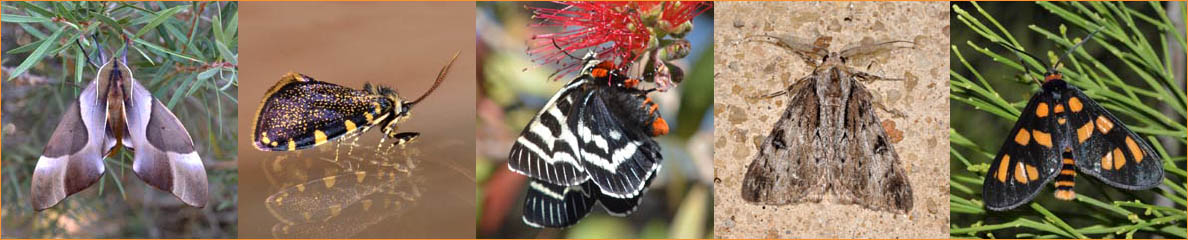
Stub Moths of Gippsland.

The members of the family Oenosandridae used to be included in the Notodontidae, but have been separated into their own family. They get their common name from their appearance which in some species resembles the stub of a broken twig. The first moth featured though is too beautiful to be thus described, it is Boisduval’s Autumn Moth, Oenosandra boisduvallii, the larvae feed on eucalypt foliage.

Male.

Female.

There are three named species of Discophlebia in Victoria, with four as yet un-named plus some puzzles. Discophlebia celaena, the Variable Stub-moth is true to its name and I quote from MOV 2, “This is a very variable species or possibly a complex of species.”

Note the colour of the hind wings in this male specimen photographed in Providence Ponds Flora and Fauna Reserve in March this year.

The hind wings of the Yellow-tailed Stub-moth, D. catocalina are quite different. Photographed in box/ironbark bush at Glenmaggie in January, the larvae feed on eucalypt foliage.

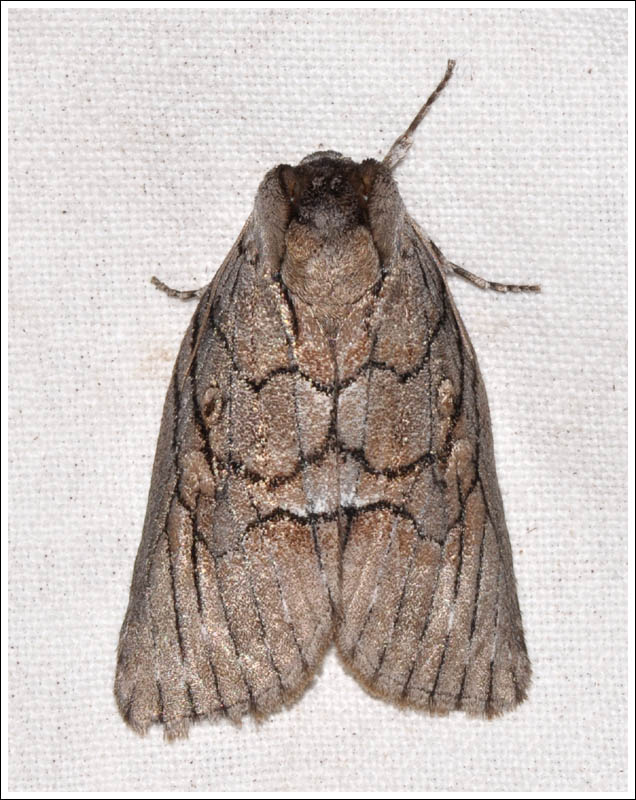
Lucas’ Stub-moth, Discophlebia lucasii seems to be less common, this one came to the light in tall foothill forest in February 2012.

I mentioned puzzles, here are two needing more examination, the first photographed in tall foothill forest in February, and the second in box/ironbark bush at Glenmaggie in March this year.

Click images to enlarge.

References and further reading.
P Marriott,
Moths of Victoria Vol. 2 2nd edition
A Field Guide to Australian Moths

Notodontidae #2.

The subfamily Notodontinae has a larger number of genera than the Thaumetopoeinae, larvae of this group are not hairy but can come in a variety of strange shapes. Seven species have come to the light locally. the most common being the Two-coloured Notodontid, Sorama bicolor.

Also relatively common is the Streaked Notodontid, Destolmia lineata, this is a variable moth and more than one species may be involved. (MOV2). The larvae of both these species feed on eucalypts.

The Patterned Gallaba, Gallaba eugraphes  is a most attractive moth and always a delight to see at the sheet, it flies from October to April. Both the male and female have pectinate antennae, with the male’s much broader.

The Eastern Notodontid, Ecnomodes sagittaria is a moth that is distinguished from Ecnomodes sp(1), (MOV2), by the breadth of its antennae. Male and female moths came to the light at Valencia Creek East in September 2015.

Female.

Male.

Male.

Psalidostetha banksiae, the Banksia Moth is quite beautiful, and has the habit of feigning death if handled. The larval food plants come from the Proteaceae family, Banksias, Hakeas, and Grevilleas for example. This moth was photographed in May 2013 at the Giffard Flora Reserve where there is plenty of Banksia serrata.

Playing dead.

The Gum Rough-head, Hylaeora eucalypti flies mainly in autumn, it is an impressive moth and several came to the light in tall forest in the foothills in April 2012. the common name is very apparent in the first image, females all. The attractive larvae feed on eucalypt foliage.

The final moth in this group is the Golden Notodontid, Neola semiaurata, named for obvious reasons. In January of this year several came to the light in box/ironbark country at Glenmaggie. The larvae of this moth feed on a variety of plants.

Click images to enlarge.

References and further reading,
P Marriott,
Moths of Victoria Vol. 2 2nd edition,
A Field Guide to Australian Moths,
Moths in Australia