An early arrival at the light was this female Entometer fervens, (Lasiocampidae) MOV 1 shows no flight records in June and July so she must have been making up for lost time. She fluttered about on the concrete for some time and the first image shows that she scattered eggs. At packing up time she was carefully placed on a nearby shrub.

Fluttering up the sheet.


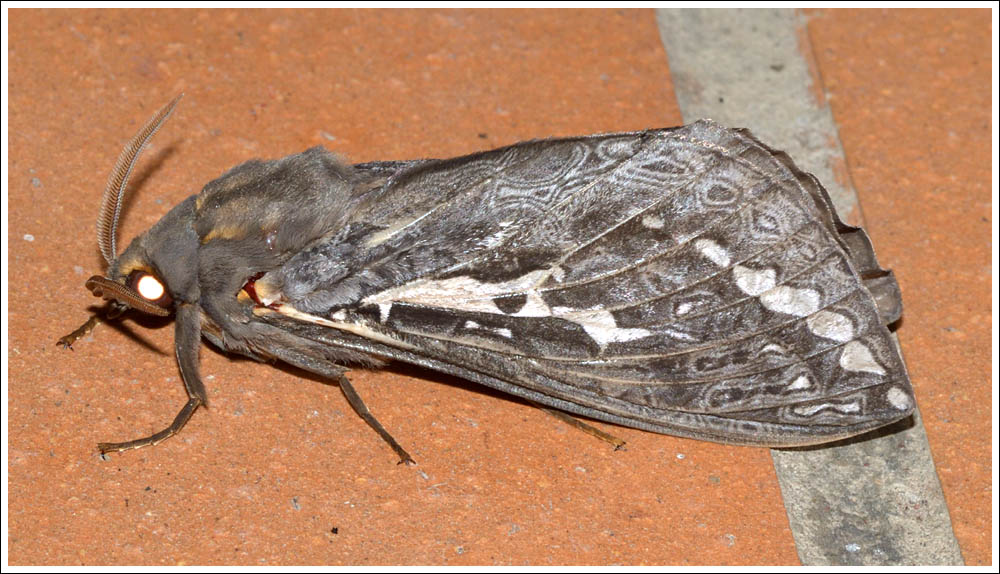
Of interest was the second home record of Oxycanus australis (Hepialidae), a species that has not been encountered in all the many previous bush sessions. The longer antennae pectination visible in the images help to distinguish the species from Oxycanus dirempta where the rami are much shorter. Reference Moths of Victoria Volume 6.


Two Microdes have come in, Microdes squamulata (Larentiinae) first, June is noted as a lesser flight month.

The other, Microdes oriochares is described in Moths of Victoria Volume 3 as being of alpine and sub alpine distribution, with flight months December and January. In May 2013 records were made at home, and this June it has turned up again, interesting.